Kitchens cabinets see constant use and exposure to cooking, which makes them magnets for grease, fingerprints, and food residue. Even with regular house cleaning in Sea Cliff, doors, knobs, and trims can quickly become sticky or dull. That’s why it’s essential to know how to care for kitchen cabinet surfaces properly, protect finishes, and achieve lasting results. Read on to see how to approach this step by step.
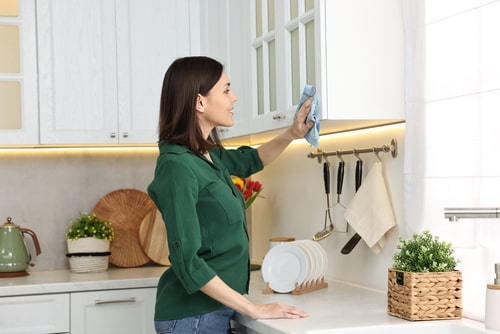
How do you get grease off kitchen cabinets?
The best way is to choose a finish-safe degreasing solution, let it sit briefly, then wipe, rinse, and dry. The process is simple, but if you want to make any part of house cleaning more effective, the results depend on doing it correctly. For cabinets, that means choosing the right product and taking a little time to prepare.
Why do kitchen cabinets get greasy?
Cabinets close to the stove or oven are exposed to airborne oil particles. These combine with dust and steam to form a sticky film that clings to doors, edges, and trims. The key to removing it effectively is selecting the correct solution and giving it time to break down the buildup.
What to use to clean kitchen cabinets?
A degreasing solution paired with a soft cloth or non-abrasive sponge usually does the job. Start mild and increase strength only if needed.
- Dish soap + warm water: Safe for most painted, laminate, and sealed wood doors.
- Black tea for laminate: The tannins can help lift film and add a subtle sheen.
- Finish-safe degreaser: Use when residue is stubborn; follow product directions carefully.
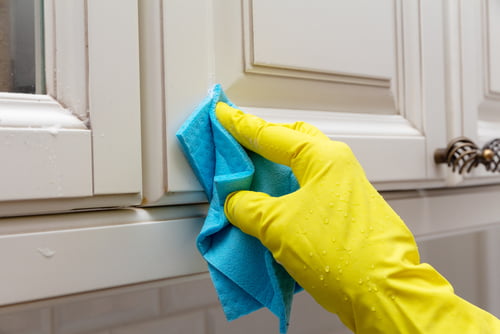
Method tip: Apply the solution to your cloth, not directly onto the cabinet. Allow one to three minutes of dwell time, then wipe, rinse with fresh water, and dry completely.
What not to use to clean kitchen cabinets?
Some products may cause more harm than good. Avoid them to preserve finishes.
- Abrasives and scouring pads: Scratch paint and glossy coatings.
- Undiluted ammonia, bleach, or solvent mixes: Cloud or strip finishes and may corrode hardware.
- Excess water on wood: Can swell edges and joints.
- Vinegar for grease: White distilled vinegar is an amazing cleaner, but it’s not always effective. It may work on mineral deposits, but not strong enough to break down oily residue and may dull finishes.
Once you identify a reliable solution, tool, and method, you can repeat the same process every time with consistent results.
How to clean crevices of kitchen cabinets?
Use a soft brush with a mild degreasing solution applied to the tool, gently scrub along the profiles, then wipe, rinse, and dry.
Why do cabinet crevices get dirty and why are they hard to tackle?
Raised panels, rails, and corners trap oil and dust in ways flat cloths cannot reach. Over time, the residue compacts, making the detail areas look darker or sticky even when the larger surface looks fine.
How do you clean cabinet crevices effectively?
- Tools: Use a toothbrush, artist’s brush, or cotton swabs for grooves. Follow with microfiber to lift residue.
- Solution: Apply the same mild dish soap and warm water or diluted degreaser used on door faces.
- Method: Dip the tool, shake off excess, trace the lines, then remove residue with a damp cloth. Finish with a rinse and dry thoroughly, especially around seams.
How to clean dirty cabinet hardware?
The most reliable way is to wash handles and pulls with mild soap and warm water, rinse well, and dry thoroughly. For heavier buildup, remove them and treat off the door.
Why does kitchen cabinet hardware get dirty?
Handles and pulls are touched dozens of times a day. Natural skin oils, lotions, and food residues collect quickly, adding to the grease and dust that already settle in the kitchen environment.
How to clean kitchen cabinet hardware?
Routine upkeep combined with periodic deeper care keeps hardware looking good and prevents grime from spreading back onto cabinet doors.
- Wipe handles and backplates with warm, soapy water
- Use a soft brush or cotton swab for grooves and seams
- Follow with a clean-water pass and thorough drying
- For deeper care, remove hardware if possible
- Photograph placement and keep parts together
- Submerge in warm, soapy water and brush away buildup
- Rinse well, dry fully, then reinstall
- As an alternative, some hardware can be placed in the dishwasher
- If needed, apply a finish-appropriate polish on unlacquered metals only.
Who provides high-quality house cleaning in Sea Cliff?
With Maid Brigade of Long Island, cabinet fronts, profiles, and hardware get careful attention, from degreasing that protects finishes, to detailed work in crevices, to thorough drying for a polished look. From homes near Central Hall to the other side of Sea Cliff, we deliver precise, consistent care that keeps kitchens guest-ready without the hassle. Prefer a plan? We offer flexible recurring options that fit your routine. Want a kitchen that looks good day in and day out? Book your visit now and let our team handle the hard parts.